It is the first question most owners ask: how much is my scrap car worth? Two vehicles of the same age can receive very different offers. One may run and have parts in demand; the other may be missing its engine or catalytic converter. Market prices and pickup location also matter.
This guide explains the main factors behind an offer and how to compare buyers. For a specific figure, request a quote with your vehicle’s year, make, model and condition. See our cash for scrap cars service for more about the process.
Scrap value, parts value and resale value
There are three broad ways a buyer may value an end-of-life car:
- Resale value: The vehicle can be repaired or driven and sold again.
- Parts value: The vehicle cannot be sold as-is, but working components can be reused.
- Scrap value: The vehicle’s main remaining value is its recyclable material.
People often call any old car “scrap,” even when it may have reusable parts or resale value. A running car may be worth more through our used car buying service, while an incomplete or severely damaged vehicle may be valued mostly for parts and metal. Some owners choose to sell a car for parts.
What affects the offer?
1. Vehicle weight
Metal is valued by weight, so a full-size pickup or SUV may have more scrap value than a small compact car. Weight is only one part of the offer; a lighter vehicle with valuable reusable parts may still be worth more overall.
2. Metal markets
Steel and other recyclable materials move with market conditions. That is one reason an offer can change over time. Ask how the buyer’s quote works and how long it is valid.
3. Catalytic converter
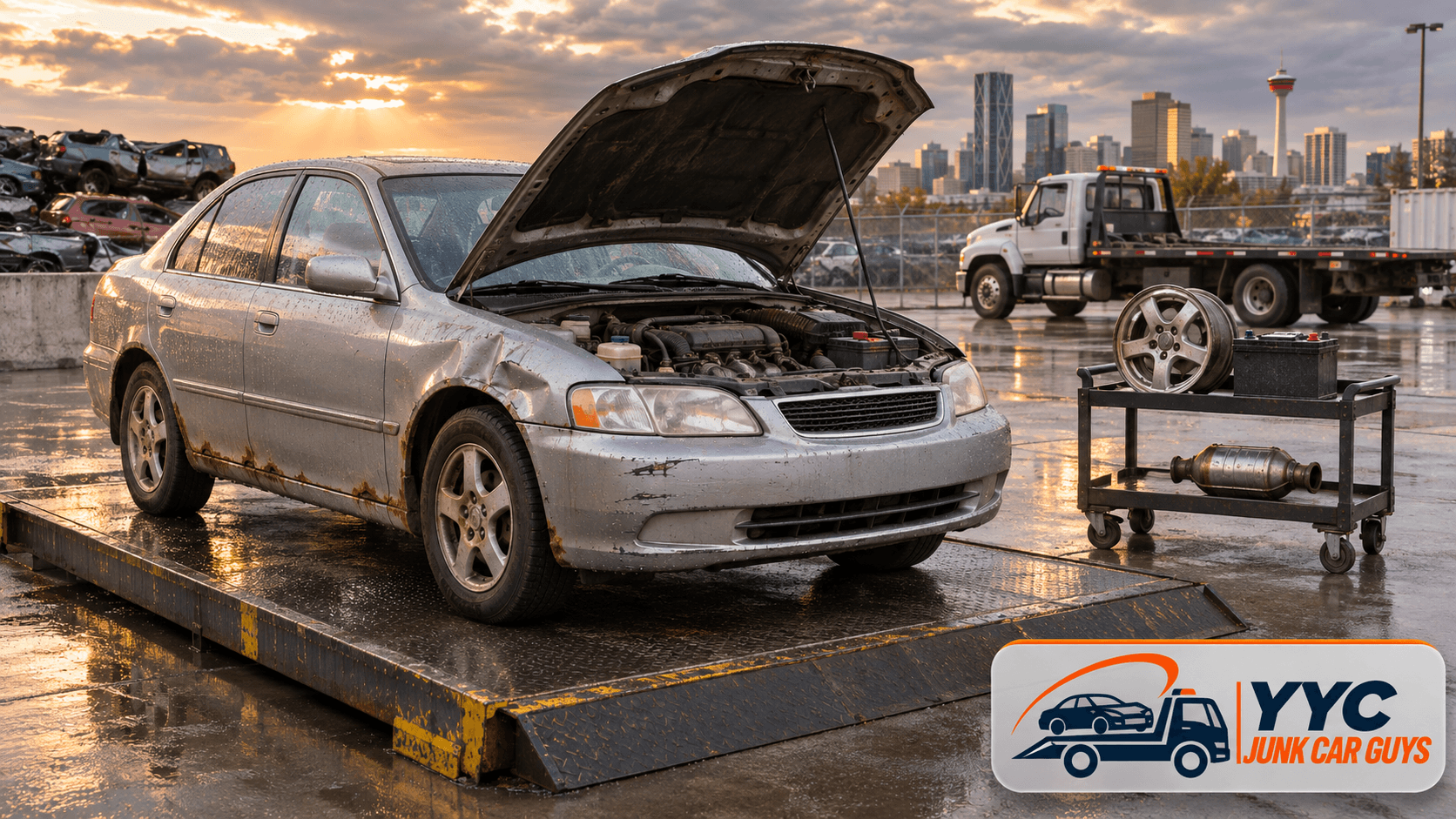
Catalytic converters contain valuable metals. If the original converter is present, it can contribute to the vehicle’s value. A missing converter may lower the offer, so mention it when requesting a price.
4. Completeness
An intact vehicle can be worth more than one missing an engine, transmission, wheels, battery or major body panels. Tell the buyer about any parts that have already been removed.
5. Make, model and year
Common vehicles may have parts that are easier to reuse. A model’s demand for engines, transmissions, doors, lights or interior pieces can affect its value even when it no longer runs.
6. Whether it runs
A car that starts and drives may have resale or parts value above its metal. Be clear about whether it starts, moves under its own power, and has warning lights or major mechanical issues.
7. Pickup location and access
An accessible vehicle on a driveway is simpler to load than one in a field or tight underground parkade. Tell the buyer about access, missing wheels and whether the car rolls. Review how free car towing works and confirm arrangements for locations outside the regular service area.
How to compare offers
- Write down the year, make, model and approximate kilometres.
- Note whether it starts and drives and list major missing parts or damage.
- Take clear photos of all sides, the interior and any damage.
- Ask two or more buyers for a firm offer using the same details.
- Confirm towing, pickup timing, payment timing and whether any fees apply.
The highest phone quote is not always the best final offer. Ask whether the price is firm if the vehicle matches your description, and whether towing will be deducted. A clear written or confirmed offer helps you compare what you will actually receive.
Examples of how condition changes value
These are illustrations, not price estimates:
- A small older sedan with a seized engine and missing converter may be valued mainly for its metal.
- A complete SUV with a failing transmission may have reusable engine, body and interior parts.
- A work pickup may have greater weight and parts demand, even if it has been parked for years.
The lesson is simple: describe the actual vehicle. A label such as “junk car” does not tell a buyer enough to price it accurately.
What does not always raise scrap value
Washing the vehicle usually does not change its metal value. Cosmetic dents may matter less than missing major components. Do not remove a catalytic converter or other parts before getting an offer; removing them may reduce the value more than selling them separately would add.
You do not need to drain fuel or other fluids yourself. Proper end-of-life vehicle handling includes managing fluids and recyclable components. Learn more about auto recycling.
For a specific offer, get a quote, read more about cash for scrap cars, selling a scrap truck, and free car towing, or return to the homepage. Browse more guides on the blog.